2026 SAHM Annual Meeting
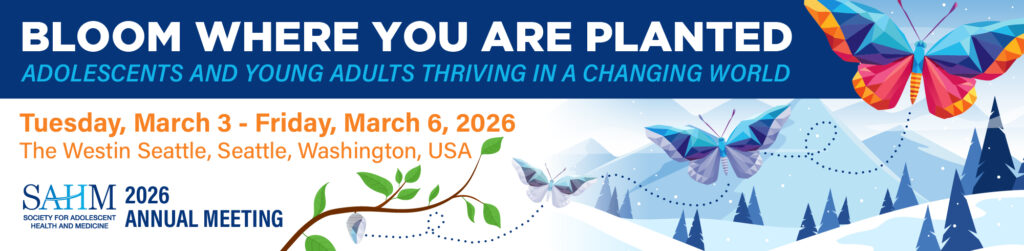
Date: Thursday, March 5, 2026
Time: 1:30 PM - 3:00 PM PST (Date & Time Subject to Change)
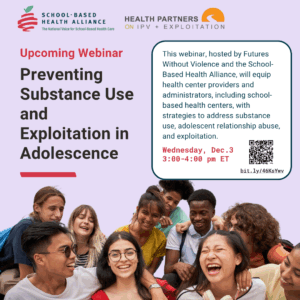
Adolescent relationship abuse (ARA) is a prevalent public health problem involving psychological and physical abuse, sexual exploitation, and reproductive coercion within teen relationships. Human Trafficking (HT) and exploitation are not uncommon with profound impacts on adolescent health and wellbeing. Join Health Partners on IPV +Exploitation, and School-Based Health Alliance for a session titled, “Adolescent Relationship Abuse and Human Trafficking: Collaborating Across Systems for Prevention and Intervention” at the 2026 Society for Adolescent Health and Medicine Annual Meeting.
Health Partners on Intimate Partner Violence + Exploitation and the School-Based Health Alliance, partnered to train school-based healthcare (SBHC) providers and staff on strategies for addressing ARA among their patients. This intervention was informed by a previous study in SBHCs that found that patients who received brief universal education and harm reduction counseling about ARA were more likely to recognize sexual coercion, had increased knowledge of relationship abuse resources, and had increased self-efficacy to use harm reduction behaviors.
School is an important part of an adolescent’s social network and as such, SBHCs are well positioned to address ARA and exploitation, and the resulting physical and mental health consequences. Involving youth, health centers, schools, and local violence prevention advocates is vital to creating a multi-sectoral support system for adolescents experiencing ARA and exploitation.
In this workshop, presenters from Health Partners on IPV +Exploitation and SBHA support participants in creating a plan to address ARA and HT in their setting. In addition to sharing clinical approaches to offering universal education and support related to relationship abuse, presenters will discuss strategies participants can use to collaborate across systems.
Participants will learn about strategies for engaging community partners (including local domestic violence prevention organizations) and ideas for partnering with youth to promote healthy relationships. Specific skills building will focus on 1) building formal referral processes among schools, SBHCs, DV advocacy organizations; 2) shifting from mandatory reporting to mandatory supporting; 3) creating memoranda of understanding; and 4) supporting staff wellness including those impacted by violence. Through group discussion, think-pair-shares, and individual reflection, participants will identify opportunities to strengthen their own clinical settings’ practices related to ARA and exploitation.
Learning Objectives:
- Create a plan to implement at least three strategies to address adolescent relationship abuse and exploitation.
- Identify at least two collaborating organizations to support prevention and intervention efforts related to relationship abuse and exploitation.
- Delineate a plan for involving youth in addressing relationship abuse and exploitation within the school or broader community.
Speakers:
- Elizabeth Miller, MD, PhD, FSAHM, Chief of Adolescent Medicine, Children’s Hospital of Pittsburgh, UPMC
- Emily Baldi, MSW, Senior Manager, School-Based Health Alliance
- Kenede Pratt-McCloud, Program Assistant, Health Partners on IPV +Exploitation, Futures Without Violence
Learn more about the conference here.